Turns out the font Helvetica in size 12 wasn’t the insane competitive advantage I thought it was.
My job hunting ritual looked like this: apply, refresh your inbox, get ignored, apply more, spiral a little, try a new manifestation technique and repeat.
I applied to a lot of jobs. If applying for jobs were an Olympic sport, I would definitely win gold.
Then I changed my resume.
The “Why isn’t this working?” resume

Some of my earlier resumes genuinely looked like I was fighting for my life in Microsoft Word. I was so sure, ATS couldn’t possibly resist my Helvetica, font size 12, formatted masterpiece.
But it quickly became obvious what the issue was. Here are some I believe you can relate to:
- Listed tasks on tasks on tasks. Where was the result of all this work I did?
- Peppered with phrases like “responsible for” and “assisted with.”
- Tried to include everything, even stuff from my primary school about some competition I definitely did not remember.
If you do nothing else, do this
Rewrite every bullet using this formula (the STAR method): Action verb + what you did + result.
My go-to examples are:
- Led ___ → resulting in ___
- Built ___ → improving ___
- Managed ___ → impacting ___
Add one number per role (It’s a must)

Even if it’s estimated, add numbers. You don’t need massive metrics. Even simple daily tasks form a part-time job have numbers like:
- Helped 50+ students.
- Handled 20+ customers per shift.
- Boosted views on TikTok by 10k.
Numbers make your work real.
Tailor 20 per cent, not 100 per cent
Don’t rewrite your whole resume. We don’t have the time for that while managing the circus that is student life. Just adjust keywords to match ones in the job description, reorder bullet points, highlight relevant experience or cut some.
Answer one question: “So what?”

Every bullet point now had to pass this test: Why should anyone care?
If it didn’t show impact, results or learning, it was cut.
When you need a second set of eyes

As a final resource, I used tools like ChatGPT to help better align my experience with job descriptions. An easy prompt to use is:
Rewrite my resume bullet points to align with this job description. Focus on impact, results and metrics. Use strong action verbs and make each bullet point concise and specific.
Here is my experience:
[PASTE YOUR EXPERIENCE]
Here is the job description:
[PASTE JOB DESCRIPTION]
I can’t emphasize this enough: don’t just copy and paste what A.I. generates. Fine-tuning is mandatory. Think of it as a starting point and a way to reframe your experience. Some obvious changes began giving me hope. A.I. can be a useful tool when used correctly, but your personal sharpening is the cherry on top.
The magic happened
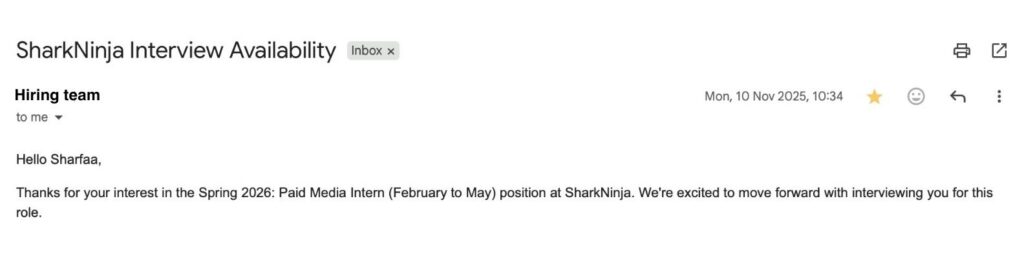
Once I made those changes, I started getting interviews with companies like Maple Leaf Sports & Entertainment, Rakuten Kobo, SharkNinja, Indigo and HarperCollins.
Nothing about my qualifications had changed at that moment. I just understood that recruiters didn’t have the time to decode my potential. They’re scanning for clarity. I needed to make the match obvious.
Not just my story
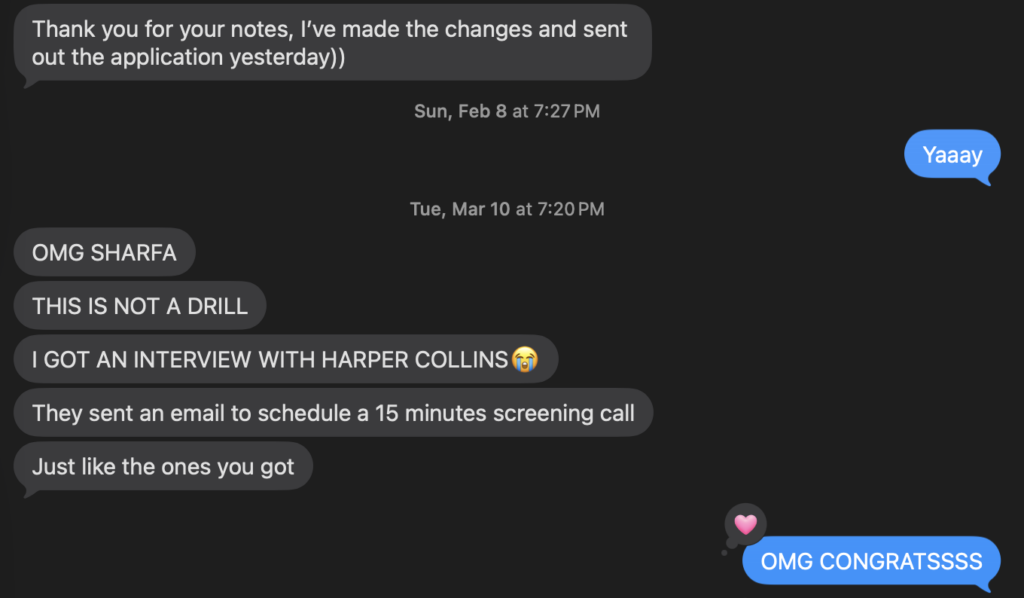
I’ve seen this play out beyond my own experience, too. A friend of mine struggled for over a year to land interviews, even though she had relevant experience. I offered to tweak her resume based on whatever I had figured out.
She had her first interview with a major publishing company last week.
The problem was never your potential

Your resume isn’t a summary of your past. It’s a pitch for your future.
And sometimes, the difference between silence and an interview is just how you tell your story.
Feature image courtesy of Resume Genius via Unsplash.
Looking for more tips? Check out how group projects apply to real life and your career!
Follow us on YouTube, Instagram and TikTok for all things student life.