Goal for the semester: make it the best it can be
When January rolls around, everyone has one thing on their mind — making this year their best year. Resolutions and vision boards are filled with goals to eat healthier, study better, learn a new language and hopefully have a better sleep schedule (keyword: hopefully).
These goals can take one of two shapes: intentions or resolutions.
But what is the difference? And which works better?
Intentions and why they matter

When it comes to achieving a goal, say you want better grades, intentions can be one of two types: goal intentions, where you decide what you want to achieve, and implementation intentions, which focuses on how to achieve that goal.
With goal intentions, wanting to achieve something doesn’t always translate into actually achieving the goal. That’s because it does not take into account the situational factors (a sudden cold, invites to parties, unexpected deadlines) that can become an obstacle along the way.
Research shows that implementation intentions are more reliable because it answers all the key questions of when, where and how a goal will be carried out. This approach is also known as “if-then” planning.
For e.g., if your goal is to get better grades the plan will sound something like: “If it’s 6 p.m. on Tuesday, then I’ll go to the library and review my course material.”
This method of planning works because it links a specific situation (the if) to an action (the then), turning the choices that you make into a habit, making it easier to maintain and build new habits over time.
Pressures of resolutions

Resolutions, as we know, can be very motivating. The “fresh start” effect is very real, giving us a blank slate to work with when the new year rolls around.
However, resolutions are very outcome focused.
Resolutions are clear and measurable but often paired with an unspoken pressure to achieve them quickly and visibly without having concrete plans on how to get there. This ends up being a setup for failure.
When people don’t achieve their resolutions, it ends up making them feel demotivated and in turn abandoning them altogether. Clear structuring and approach-oriented resolutions can improve those outcomes.
Remember: Resolutions aren’t doomed, they are just fragile when left unstructured.
Why intentions work better

Research suggests that forming habits for long-term change is more closely tied with identity and values. When you define who you want to be, actions tend to follow more naturally. Intentions align with this idea.
On the other hand, resolutions are not consistent because they are not sustainable. The driving force of resolutions is motivation — a resource that fluctuates frequently.
For example:
A resolution says: I will go to the gym more often.
An intention says: I want to get fit and move more.
Both encourage a healthier lifestyle but the second leaves more room for other forms of exercises that can work outside of gyms.
Intention reduces the pressure of an all-or-nothing mindset and makes achieving a goal more favorable than a deadline. A missed day will simply become a part of the process.
How you can start

Start by defining what your resolutions are. While resolutions on their own aren’t as effective, they can still give you a general sense of direction — whether that’s getting a new job, improving your grades or eating healthier.
Think of resolutions as the outline of your end goal. Intentions, on the other hand, fill in the details by shaping the “why” and “how” behind those goals. They turn a broad idea into something that you can actually work towards.
Take the first weeks of January as mental checkpoints, ask yourself:
- What worked for me last year?
- What do I want to work on?
- What do I want to improve?
- How can I realistically achieve these?
How you answer those questions will help you set the tone for the months ahead.
Rethinking “failure”

One important point to keep in mind is redefining what success looks like. If a resolution fails, it’s often abandoned but if an intention wavers, it can still be revisited and continued.
Change is rarely linear, and goals don’t follow a January-to-December checklist. It’s messy, personal, chaotic and constantly evolving.
So maybe the real question isn’t whether you start the year with resolutions or intentions — but whether you are ready to see your failures as feedback.
So…what’s your goal?
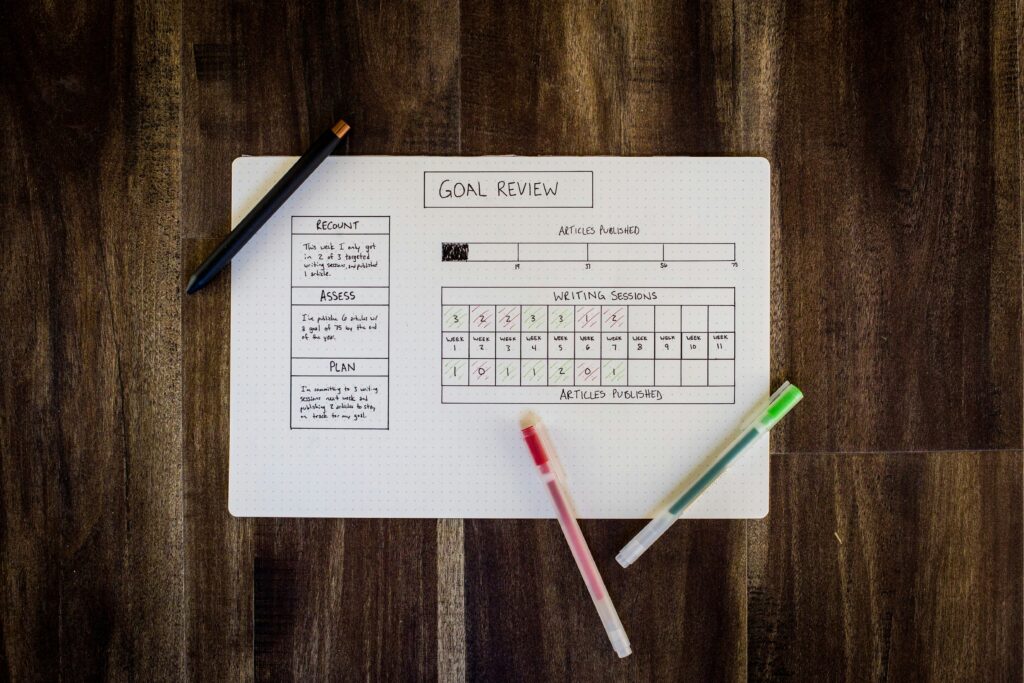
The way you start a new year does matter, because it sets the tone.
Instead of chasing perfection this new year, focus on building habits that resonate with your long-term goals (even if it is fixing your sleep schedule).
So this year, ditch the hype and set clear goals for yourself one intention at a time.
Feature image courtesy of Kelly Sikkema on Unsplash
Notice things your friends do? Check out things friends do that just make sense.
Follow us on YouTube, Instagram and TikTok for all things student life.